Legal Demand Letter Gives Hennepin County 10 Days to Confront the Toxic Ash from the HERC Trash Burner
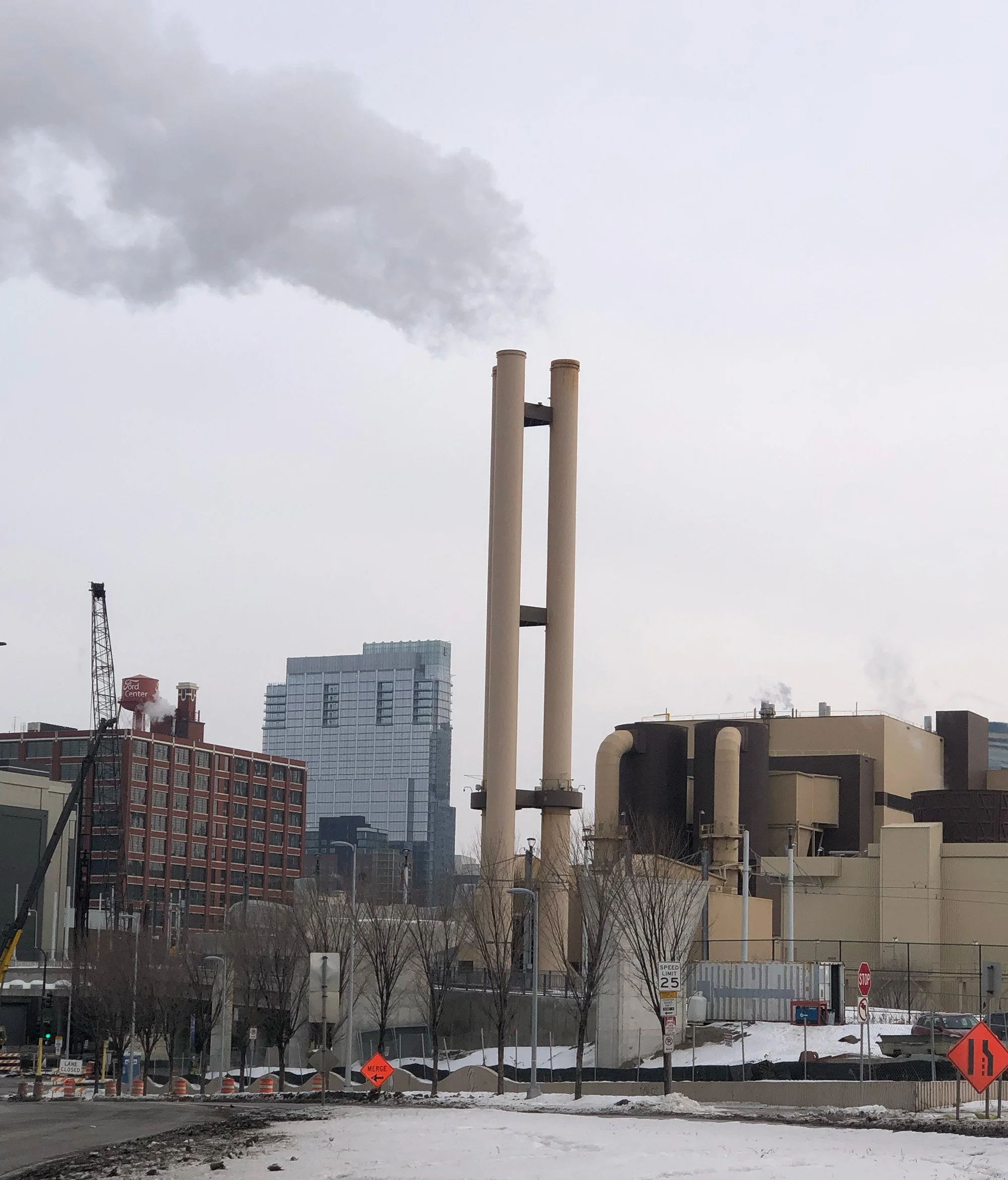
he Minnesota Center for Environmental Advocacy, part of the Zero Burn Coalition, is demanding Hennepin County comply with state law and account for the lead, mercury, dioxins, and forever chemicals in the HERC trash burner's ash.
WATCH: https://www.facebook.com/share/v/1CvXADmXKH/
MINNEAPOLIS -- The Minnesota Center for Environmental Advocacy (MCEA), part of the Zero Burn Coalition, sent Hennepin County a legal demand letter on Wednesday, June 10, requiring it to comply with state law and confront the toxic ash produced by the HERC trash burner. Under Minnesota Statute § 115A.97, the county must state strategies in its Solid Waste Management Plan for reducing the toxicity and quantity of that ash, but its 2024-2029 plan does not mention incinerator ash at all despite a documented history of operational failures tied to ash. The county has 10 days to respond before MCEA takes legal action.
For every ten tons of trash burned at the HERC trash burner, two tons are left as toxic ash — roughly 80,000 tons each year — and trucked to an industrial landfill in northern Dakota County. The ash is hazardous, dense with lead, cadmium, mercury, dioxins, and PFAS forever chemicals, and exposure to those substances is linked to cancer, neurological damage, immune suppression, and reproductive harm. The letter also cites a county facility assessment, recently obtained through a public records request, that found the HERC's ash-handling equipment "ash encrusted, badly corroded, and physically damaged."
Luke Norquist, Staff Attorney at the Minnesota Center for Environmental Advocacy, explained the county's legal obligation and why the demand letter was necessary.
"Incinerator ash is dangerous, and the county needs to take steps to reduce the risks. Scientists have spent decades developing techniques that could be used to make the HERC’s ash less toxic. But in its most recent plan, the county chose not to address the topic at all. The law demands more."
Anita Martinez, a former Minneapolis resident who now lives in northern Dakota County, miles from the landfill that receives the HERC's ash, spoke about what it means to live downstream of the county's pollution.
"We are not asking for anything radical. We are asking the county to follow its own law, to be honest with the people who live near this pollution, and to finally answer for what it has been burying in plain sight. I was shocked to learn that the HERC's pollution followed me here. The same machine that has poisoned the air over Minneapolis is threatening the ground and the water in Dakota County. The truth is that the HERC must be shut down to avoid further harm to the public and our environment."
Leslie Myint, Associate Professor of Statistics and Data Science at Macalester College, spoke to the risks facing the communities around the ash landfill and what the county is obligated to do about them.
"This evidence points to substantial concern for the residential and farming communities near the Rosemount ash landfill who already face compounding hazards from refineries, multiple Minnesota Pollution Control Agency (MPCA) clean-up sites, and now potentially a data center. Make no mistake: Rosemount is a sacrifice zone. Hennepin County has a legal mandate to reduce the toxicity of HERC's trash and make less of it. Given what Rosemount already faces, there is one just solution: — To stop the creation of toxic ash. — HERC must close."
BACKGROUND: The demand letter comes as scrutiny of trash incinerators is mounting nationally. A Guardian investigation, which included new analysis of the HERC trash burner, found that PFAS pollution from waste incinerators is likely reaching unsafe levels, and Earthjustice and the Environmental Integrity Project filed a federal lawsuit against the EPA over its weak limits on incinerator emissions. The HERC trash burner – with its grandfathered permit and deficient emissions monitoring – sits at the center of that fight. This spring, three coalition members held a 12-day hunger strike demanding the Hennepin County Board close the facility by December 31, 2027, after years of county delay -- an escalation that drew national attention to a burner the county has run since 1989, now over 20 years past its promised closure, adjacent to a majority Black, brown, immigrant, and low-income community. EPA modeling estimates that it causes 1 to 2 premature deaths every year from its particulate pollution alone. In 2023, the County Board passed a resolution to develop a closure plan but has never scheduled the separate vote required to close it. This demand letter is the next step in that mounting pressure to shut down HERC and in the meantime hold it to safer standards.
###